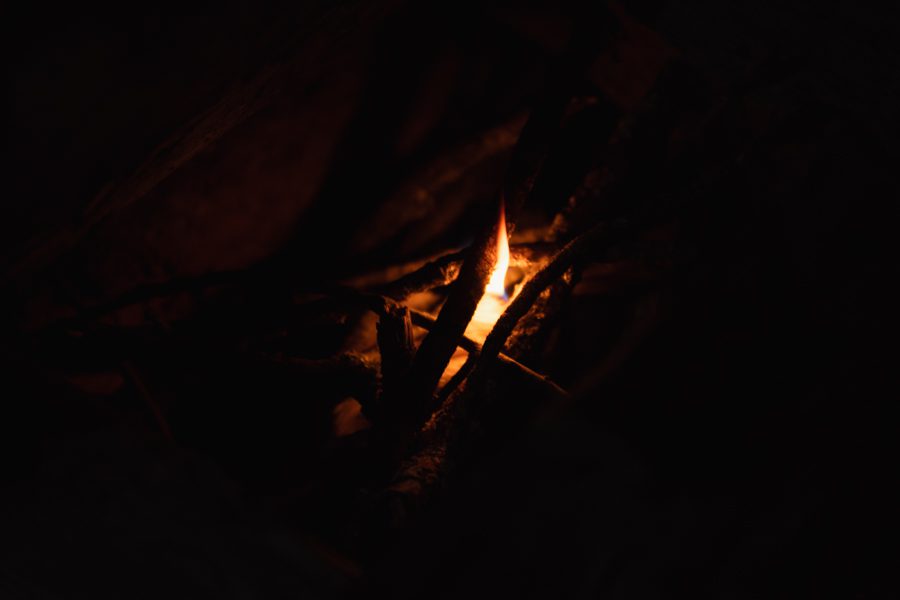
The Hindu holiday Diwali provides an opportunity for Christians to explain the eternal light we find in Jesus to those who are presently only experiencing a temporal festival of light.
India celebrates Diwali once again on Sunday, November 8, 2026. Diwali (also spelled Divali or Dipawali—“deepa” means lamps and “avali” means array or row, meaning “an array of lights”) is the largest and most important festival of lights, celebrated throughout India and in the Indian diaspora.1 The celebration lasts up to five days, with homes decorated with lights, large fireworks displays, family get-togethers and special dinners, new clothes, and gifts exchanged.
Mythological Background
Three major mythological stories are linked to the origins of the Diwali festival. In southern India, Diwali commemorates Lord Krishna’s slaying of Narakasura, the demon ruler of Pragjyotisha—a name that “symbolizes the descent from divine origins into Naraka (hell-like qualities) through ego and the misuse of power.”2 Krishna, the most powerful incarnation of Vishnu—one of the three deities in the Hindu Trinity—defeated Narakasura and liberated the world from tyranny and oppression.3
In northern India, Diwali marks Lord Rama’s return after he defeated the demon king Ravana, who was the asura or demon king of Lanka, and was “bestowed with a boon from Lord Brahma and gifted with an invincible sword by Lord Shiva himself.” As a righteous prince and later king, Lord Rama was characterized by “kindness towards his devotees and followers and his unshakeable sense of dharma, his duty, towards his parents and family, makes him the personification of the perfect man.”4 After defeating Ravana, Rama returned to Ayodhya with his wife, Sita, and his brother, Lakshmana. The people lit clay lamps, known as diyas, to welcome them and illuminate their path, particularly on the night of the new moon.
Diwali is also widely celebrated as a time to honor and worship Goddess Lakshmi, the goddess of wealth, prosperity, and auspiciousness. According to legend, Lakshmi emerged from the churning of the cosmic ocean, Samudra Manthan, on Diwali night. Businesses and households welcome her into clean, illuminated homes, inviting an abundance of material blessings in the coming year.5 Although accounts differ regarding Diwali’s origins, it centers on a single, unifying theme: light conquering darkness.
The Light That Conquers Darkness
The defeat of the king and the kingdom of darkness (represented by evil), deliverance from darkness into light, and a new, prosperous beginning are central ideas of the Diwali celebration, distilled into a single theme that serves to “symbolize the inner light that protects from spiritual darkness.”6 Although this theme is not discussed comprehensively or systematically in Hindu mythologies, the universality of sin, the human longing for God, and the prospect of a bright and prosperous future may result from God’s universal/general revelation through nature and human conscience—even in our lostness, we all long to enjoy peace, to be delivered from evil, and to experience transcendence. Indeed, God “did not leave Himself without witness” (Acts 14:17).7 And, “For since the creation of the world His invisible attributes, that is, His eternal power and divine nature, have been clearly perceived, being understood by what has been made, so that they are without excuse” (Romans 1:20).
So, perhaps God’s universal/general revelation provides a point of connection between Hinduism and Christianity here. Although Hindus celebrate Diwali each year, they are generally unaware of the underlying cause of the darkness—human sinfulness—and the remedy for attaining freedom from it. The Bible provides us with the complete story of creation, the entrance of sin into this world, the redemption God provides, and a bright future in God’s kingdom. When God created this universe, the first thing created was light (Genesis 1:3), and when God concluded His creative work, He saw that everything He made was “very good” (Genesis 1:31). However, yielding to Satan’s temptation led to man’s sin and fall, and so a spiritual darkness entered into the fallen humanity. The consequence was spiritual death (Genesis 3).
The lights of Diwali shine for five days. Thereafter, those who celebrate the festival return to a life of darkness and hopelessness, awaiting another occasion to celebrate light. This is because the joy experienced during Diwali is temporary and cannot provide a complete solution to the problem of darkness. Eternal happiness and a complete solution are found only in the true light of this world, Jesus Christ!
Jesus, the Light of the World
But God, who is Light and in whom “there is no darkness at all” (1 John 1:15), sent His only begotten Son, Jesus Christ, into this world of spiritual darkness as “the Light of the world.” As a result, anyone who believes and follows Jesus “will not walk in the darkness, but will have the Light of life” (John 8:12). Indeed, Jesus is “the true Light that, coming into the world, enlightens every person” (John 1:9). Satan, the god of darkness who rules the sinful world, was defeated on the cross. By conquering spiritual darkness by His death on the cross (Matthew 27:45) and the darkness of the tomb by His resurrection (John 20:1), God in Jesus Christ declared freedom for humanity “from the domain of darkness and transferred us to the kingdom of his beloved Son” (Colossians 1:13).
Living as Followers of the True Light
The followers of Jesus, the True Light, also reflect His light. Jesus said to His disciples, “You are the light of the world” (Matthew 5:14). However, until His kingdom comes to this world, we live in a world under the power of darkness, where the principles of the evil kingdom of darkness continue to operate. Therefore, we are instructed to:
- “Walk as children of light” and bear “the fruit of the light,” which are “goodness, righteousness, and truth,” because once we lived in darkness, but now we are “light in the Lord” (Ephesians 5:8).
- “Walk in the Light” because God Himself is in the Light, and we are required to “have fellowship with one another” (1 John 1:7).
- “Put on the full armor of God” to stand against “the rulers, the powers, the world forces of this darkness, and the spiritual forces of wickedness in the heavenly places … so that you will be able to resist on the evil day, and having done everything, to stand firm” (Ephesians 6:12-13).
- “Shine before people” so that they may see our “good works and glorify your Father who is in heaven” (Matthew 5:16).
- “Prove ourselves blameless and innocent, children of God, above reproach in the midst of a crooked and perverse generation, among whom you appear as lights in the world” (Philippians 2:15).
- “Cast off the works of darkness and put on the armor of light,” and “walk properly as in the daytime, not in orgies and drunkenness, not in sexual immorality and sensuality, not in quarreling and jealousy” (Romans 13:12-13 ESV).
- Do not “participate in the useless deeds of darkness,” the deeds that children of disobedience who walk in darkness do (Ephesians 5:11-12).
- Be “a chosen people, a royal priesthood, a holy nation, God’s special possession” so that we may “declare the praises of him who called you out of darkness into his wonderful light” (1 Peter 1:9).
Come to Jesus, The True Light!
Diwali’s beautiful lights, fireworks, new clothes, and family gatherings can create the misleading impression that we are sufficient to illuminate our own lives. Yet profound questions about the existence of darkness, the meaning of true light, and the source of life’s blessings are seldom considered.
May I invite you to turn to Jesus, who can truly dispel darkness and bring abundant light and blessings into your life? He conquered darkness through His death on the cross and resurrection from the dead. If you are asleep in the darkness of a world ruled by Satan, the evil one, arise and walk toward Jesus Christ, because He “will shine on you” (Ephesians 5:15). Would you invite Him into your life as your Savior and Lord so that you can celebrate Diwali meaningfully? Jesus—the Light of the World—is inviting you.
Happy Diwali!
- Diwali is predominantly a Hindu festival. However, Jains, Sikhs, and Buddhists in India also celebrate it. ↩︎
- Prakriti Anand, “Naraka Chaturthi: Untold Story of Krishna’s Victory over Demon Narakasura,” https://www.exoticindiaart.com/article/krishna-narakasura-and-the-festival-of-naraka-chaturthi/, accessed on October 15, 2026. ↩︎
- Subhamoy Das, “Who Is Lord Krishna?,” https://www.learnreligions.com/who-is-krishna-1770452, accessed on October 15, 2026. ↩︎
- https://www.amarchitrakatha.com/rama-and-ravanas-final-battle-the-astounding-conclusion-to-an-epic-war/, accessed on October 15, 2026. ↩︎
- For a basic overview of the Diwali festival, see Carol Plum-Ucci, Celebrate Diwali (Berkeley Heights, NJ: Enslow Publishers, 2007); and Dianne M. MacMillan, Diwali: Hindu Festival of Lights (Berkeley Heights, NJ: Enslow Publishers, 1997). ↩︎
- “Diwali: Festival of Lights,” https://kids.nationalgeographic.com/pages/article/diwali, accessed on October 15, 2026. ↩︎
- Unless otherwise indicated, all Bible quotations are taken from the New American Standard Bible. ↩︎